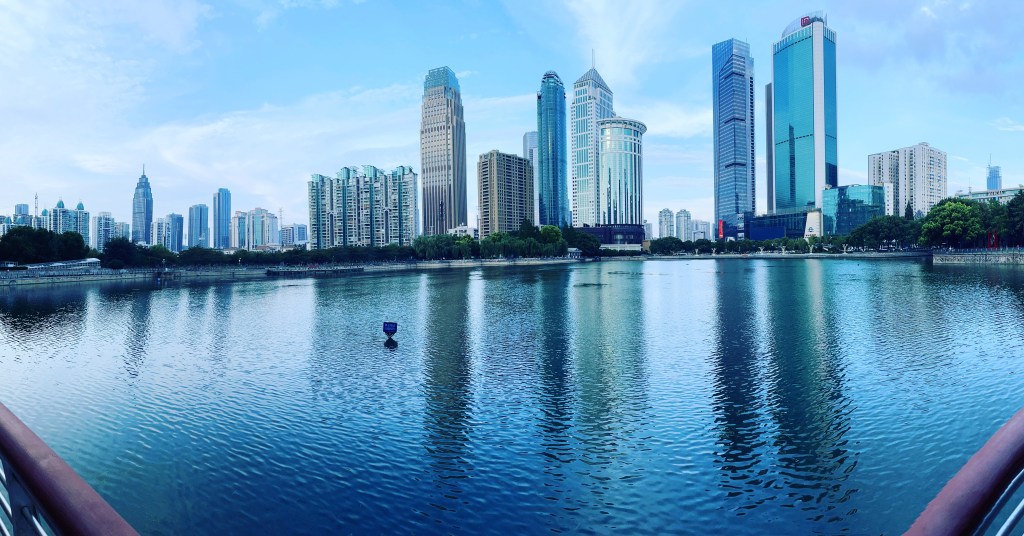
It took nearly 8 years but we are back. Wuhan and I have both grown. There are high rises as far as the eye can see and highways connecting all the major districts; more bridges crossing the Yangtze River; more subways underground and more cars above it. But the return felt like a homecoming, despite the changes in us both.
I’m working with English First (EF for short) once again, but returning as a senior teacher. With my previous experience with EF and my experience working with students in the US, I was able to return with a promoted position. More responsibility and more work for sure, but I’m excited for the challenge. Stay tuned for my adventures in teaching English as a foreign language!
When I arrived in 2012 there were 9 million people. Now, depending on where you consider the edge of the city is, it’s closer to 13 million. Still a small city by Chinese standards but Wuhan dwarfs the largest cities in the States. Before there were two subway lines, now there are 16 and counting, connecting all major parts of the city. And with electric taxis and vehicles subsidized by the government, it’s never been easier to get around. DiDi is the Chinese Uber and regularly used by locals and foreigners alike. Everything is pay by phone or QR code- I felt so archaic trying to buy fried rice the first few weeks with paper money!
Previously I lived in the Hankou district, the center of business and international commerce. Major banks have their main branch in Hankou, as well as many foreign businesses have their headquarters. Hankou is also the home to the local expat watering hole, Brussels, owned by a lovely Belgium fellow now married to a good friend here. He holds Christmas dinner for foreigners with no place to celebrate, and trivia nights during the school year. It became a home away from home for many expats living in Wuhan. More about Brussels in future posts….
This time around I’m in Hanyang. Previously my only experience with this part of the city was working in a primary school for six months which contracted EF teachers to teach their English classes and their curriculum. 50 students per class, six classes, 40 minutes per class, three to five days a week. I’ll say it was less about teaching English and more about exposing students to the language and managing the classroom. It was a grind but taught me much about the culture and how to engage any size class
In 2014, Hanyang was just beginning to develop as an economic center. It was less populated, had leas business, and had more open sky than Hankou or Wuchang. It was connected to the city by the above ground metro, though there wasn’t much going on out here to draw my attention- except the foreign import store Metro originating in Germany. Monthly I would venture out, taking the metro Line 1 to stock up on bacon, white bread, tortillas, and whatever other foreign food I was craving to make at home. I’d taxi back with my goods, overloaded bags and 500¥ less than when I started.
How Hanyang is growing exponentially with yellow cranes constructing high rise apartments as the city moves outward. More foreign cars and families with young children are seen on the walk to work, as well as more businesses, banks, and office buildings. What was once the old part of Wuhan is becoming new.
I’m excited to explore Hanyang and Wuhan with fresh eyes and a new perspective of the city. I’ll be discussing what changed and what has stayed the same on a new blog. The new one is currently under construction, stay tuned here for my adventures in Wuhan! And keep an eye out for The Wandering Yogi!
Let’s go! 加油!
 The Well-Wandered Yogi
Leave a comment